

Mémoire | Film
The survivors. The impossible departure after the Shoah – Antoine Dauer and Michèle Dominici
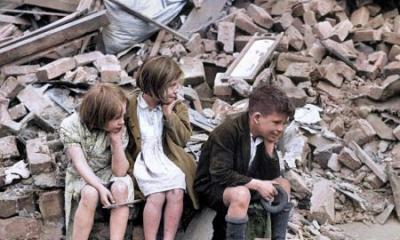
After the liberation of the Nazi camps, hundreds of thousands of survivors were left without a home, without a country, and without any immediate future. The Survivors – The Impossible Departure after the Shoah explores this little-known post-war period, between 1945 and 1948, during which around 250,000 survivors were gathered in displaced persons camps across Europe. Drawing on previously unseen archival material and personal testimonies, the film retraces their ordeals, as well as the remarkable capacity for resilience and reconstruction shown by these men and women who, amid the ruins, sought to imagine an “after.”
Partager


In collective memory, the liberation of the Nazi camps in 1945 marks the end of the nightmare for survivors of the Shoah. Yet for hundreds of thousands of survivors, a new ordeal began at that very moment.
Between 8 May 1945 and the proclamation of Israel’s independence on 14 May 1948, nearly three years passed during which these survivors were kept against their will in displaced persons camps, mainly in Germany, Austria, Italy, and Cyprus—sometimes on the very sites of former Nazi concentration camps. Designed by the Allies as temporary, these camps in fact lasted for several years, trapping their inhabitants in a painful limbo marked by uncertainty, disappointment, and anger in the face of international indifference.
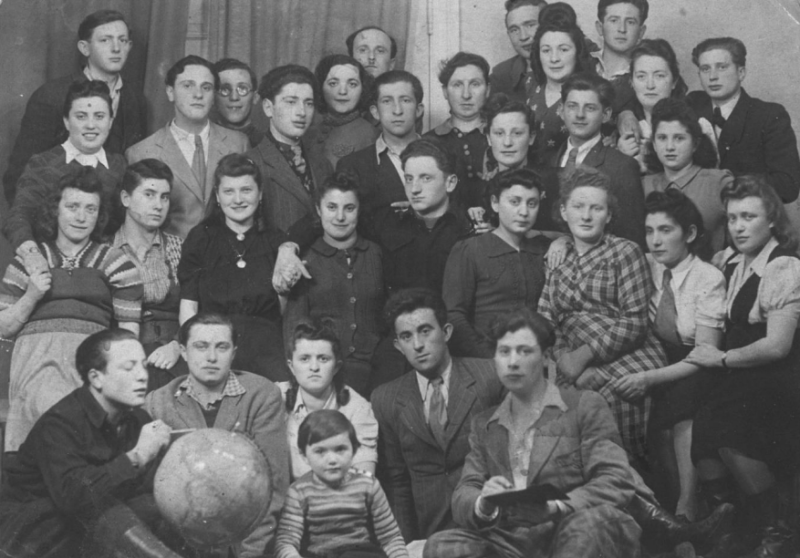
Gradually, however, these DP (Displaced Persons) camps became places of rebirth. Initially living in precarious conditions, survivors organised themselves, set up Jewish committees to manage daily life, and founded schools, theatres, musical groups, as well as political and religious organisations. With the support of international agencies, they established vocational training programmes, kibbutzim, and educational structures, preparing for a future that was still uncertain but once again conceivable.
By tracing the memory of these camps—from northern Germany to the far south of Italy—The Survivors – The Impossible Departure after the Shoah retraces a multitude of individual and collective journeys. The film tells the story of a struggle: that of women and men who, having just emerged from hell, had to relearn how to live, to hope, and to project themselves into the future amid the ruins of Europe.
Built entirely from archival footage and eyewitness testimony, the documentary offers a sensitive and embodied account of the history of Jewish survivors of the Shoah. It gives identity and voice to those who were long regarded as undesirable, placing the words of survivors at the very heart of the narrative.
A subject rarely explored on television, the film stands out for its focus on the 1945–1948 period—a pivotal yet largely forgotten phase in the history of the Shoah. While displaced persons camps, intended to be temporary, have almost completely disappeared from the European landscape, the abundant photographic and film archives documenting them remain underused. This paradox lies at the heart of the project: to bring back to light a memory threatened with erasure at a time when the last direct witnesses are disappearing.
Running time: 2 × 45 minutes
Writers and directors: Antoine Dauer and Michèle Dominici
Producer: Olivier Mille
Production company: Artline
Year of production: 2025
Historical advisor: Constance Pâris de Bollardière
This documentary received support from the Fondation pour la Mémoire de la Shoah.
Broadcast
Tuesday, 27 January 2026, at 9:00 p.m. on ARTE
Available to watch again online on arte.tv
Preview screening and discussion
Preview screening at the Mémorial de la Shoah on Tuesday, 13 January 2026, at 7:00 p.m., in the presence of the filmmakers and historian Constance Pâris de Bollardière, the film’s historical advisor.
In conversation with Laure Fourtage, historian and Head of the Archives and History Department at ORT France.